Image


Farming in Madhesh Province has always been uncertain, but climate change has made it unpredictable. Erratic rainfall, prolonged droughts, and shorter winters are now the norm. For Ram Kumari Kamait, a farmer from Laxmipur Patari Rural Municipality, 2025 was one of the hardest years. There was no rainfall during rice planting, and unseasonal rain during harvest destroyed her crop.
Ram Kumari’s transformation began in 2024 when she started her journey with the Joint Programme on Rural Women’s Economic Empowerment (JP RWEE). Through the programme, she learned climate-smart agriculture practices that changed her approach to farming.
She started producing compost from cow dung and green manure, replacing the traditional practice of burning dung cakes for fuel. About 30% of the cow dung previously used for dung cakes is now converted into compost, while LPG and electric stoves have taken over as alternative cooking fuels. Ram Kumari also developed bio-pesticides from urine and locally available materials, reducing both chemical use and costs. The programme played an indirect but crucial role in this transition by boosting household income and raising awareness about compost preparation and its benefits for crop productivity.
As part of a JP RWEE initiative with the Provincial Soil and Fertilizer Testing Lab, over 300 soil samples were tested in her municipality. The results revealed low organic matter due to limited farmyard manure application. Farmers received soil health cards with tailored fertilizer recommendations.
“This was the first time farmers in Laxmipur Patari conducted soil tests, and the results were eye-opening. We have realized how critical soil health is for productivity. Now, we are discussing establishing our own soil testing facility so farmers can access these services regularly,” said Agriculture Section Officer, Laxmipur Patari Rural Municipality.
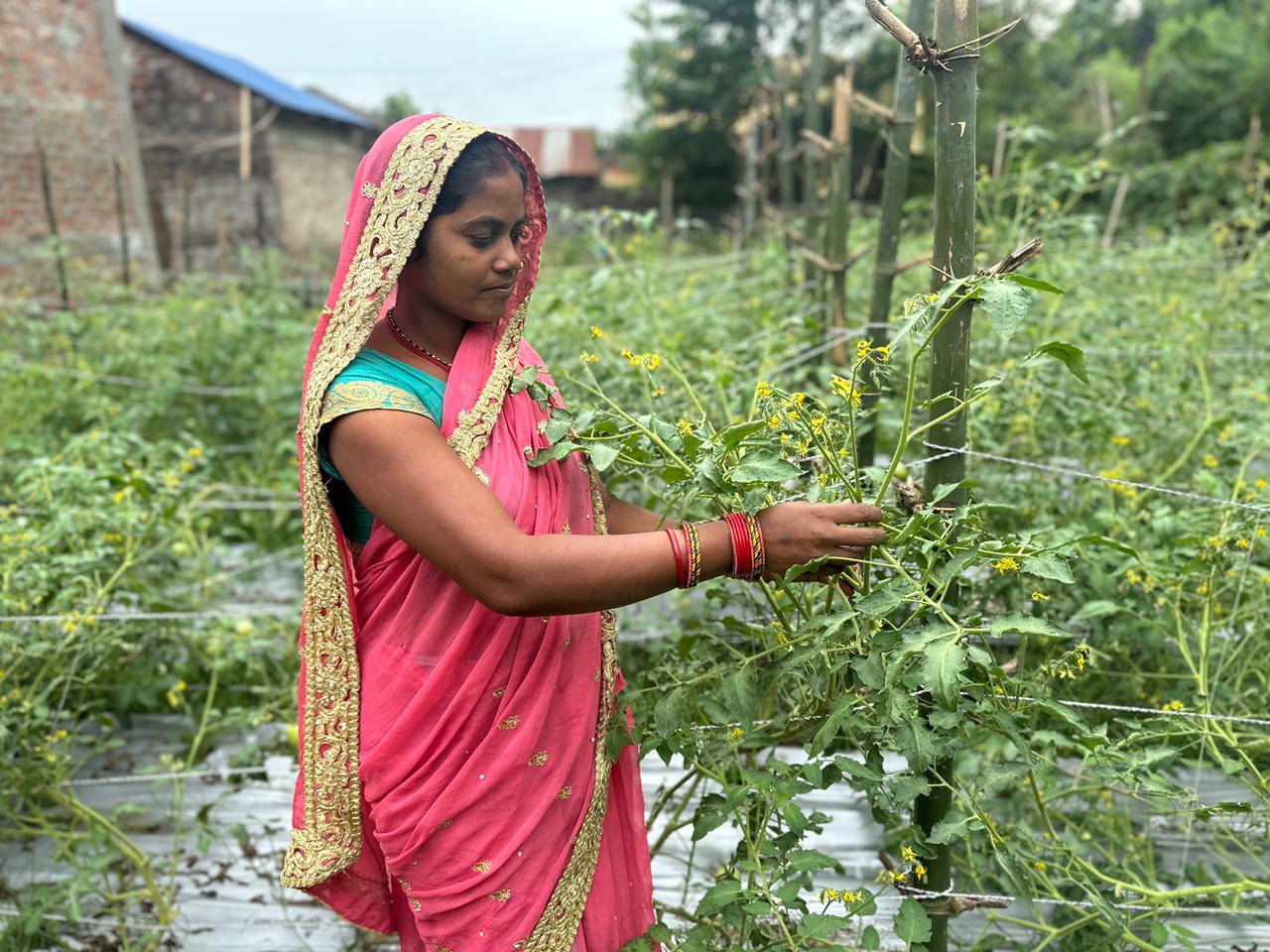
Ram Kumari adopted composting, botanical pesticides, mulching, and integrated pest management. She shifted from traditional cropping patterns to a market-focused production calendar. Last winter, she started early nurseries using hot seedbeds and plastic tunnels, enabling her to harvest vegetables weeks earlier when prices were high.
In 2025, Ram Kumari replaced rice with tomatoes—an important shift in both mindset and income strategy. Instead of planting rice, she cultivated tomatoes on 0.017 hectares of land in July, adopting an early harvest strategy to capture higher market prices before the regular season. Her first harvest started in October, and the tomatoes were sold at NRs 120 (USD 0.90) per kilogram—a price nearly four times higher than the regular season rate. This approach generated revenue of NRs 40,000 (USD 290), compared to NRs 4,200 that rice would have yielded on the same plot of land.
“Market-based production is not just an approach—it’s a game changer. It helps farmers plan crops based on demand, align harvests with peak prices, and turn farming into a profitable enterprise,” said Chandan KC, Agriculture Expert Project Field Staff.
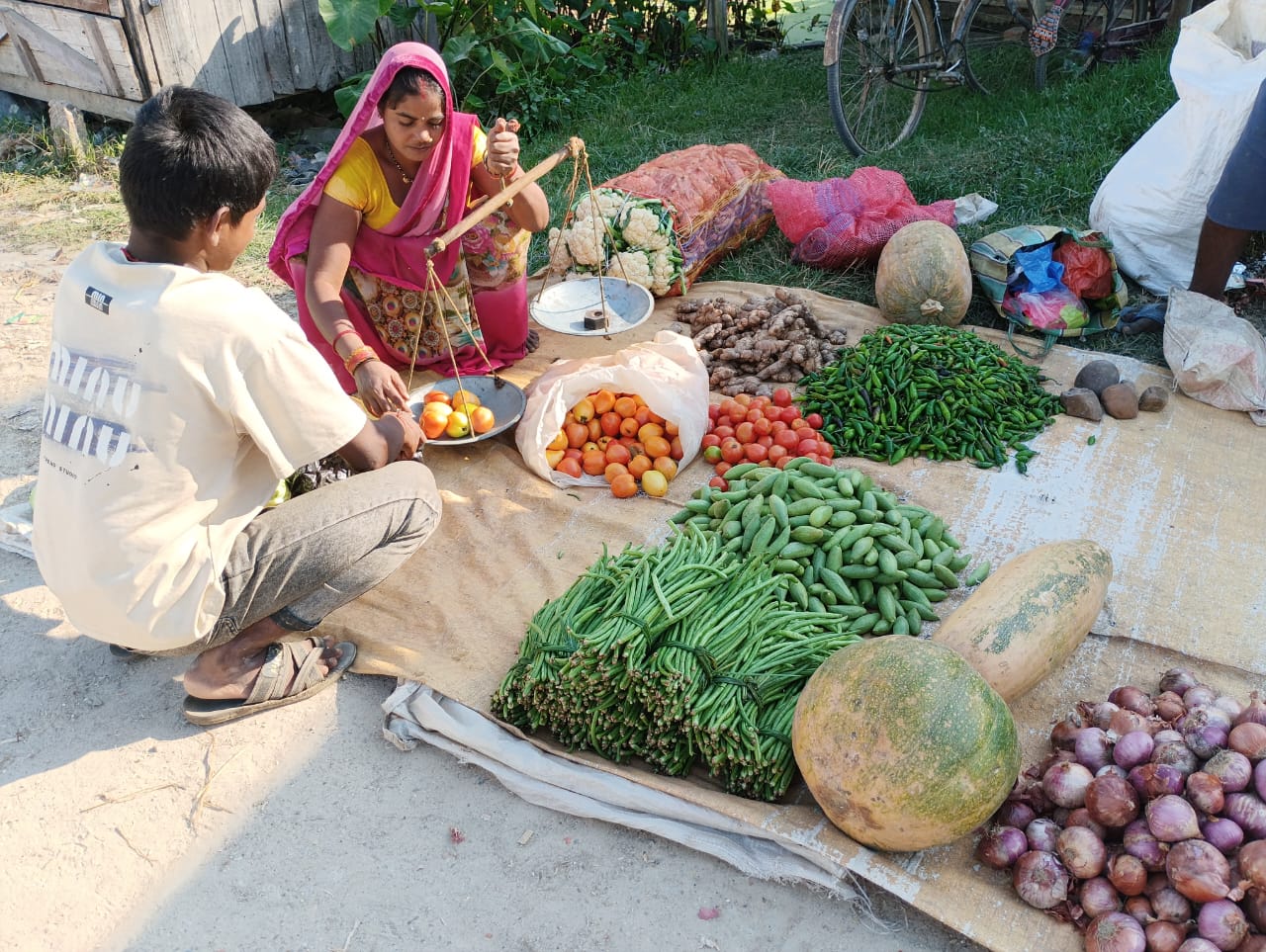
Mobile apps introduced by the programme (e.g., GeoKrishi) guide her daily decisions and help plan better. She often uses mobile apps for real-time weather forecasts and market prices.
With climate-resilient seeds for paddy, wheat and vegetables, she diversified her crops and adopted biochar and mulching to retain soil moisture and improve carbon levels. She also enrolled in livestock insurance together with other programme participants.
To respond the 2025 drought in Madhesh, the JP RWEE supported small electric irrigation motors for 755 farmers, covering 122 hectares of land. Two custom hiring centers were established in Siraha and Saptari, providing easy and affordable access to farm machinery and significantly reducing labor drudgery.
“These interventions are not just improving productivity—they are reducing drudgery and making farming viable for rural women,” said the Chairperson of Laxmipur Patari Rural Municipality.
Ram Kumari’s income nearly doubled from better timing and climate-smart planning. Her story reflects a wider transformation: over 1,100 women farmers in Siraha and Saptari have adopted similar climate-smart practices.
“Farming was just subsistence. Now I have hope—it feels like a business and a future,” said Ram Kumari.
JP RWEE created opportunities for training, networking, and visibility, enabling Ram Kumari to step forward, while her economic success from adopting high-value crops strengthened her confidence and credibility within the community. Building on this foundation, Ram Kumari has evolved from a successful farmer into a mentor and a community leader. She shares her knowledge with other women, encourages them to adopt climate-smart techniques, and advocates for policies that protect farmers from climate risks.
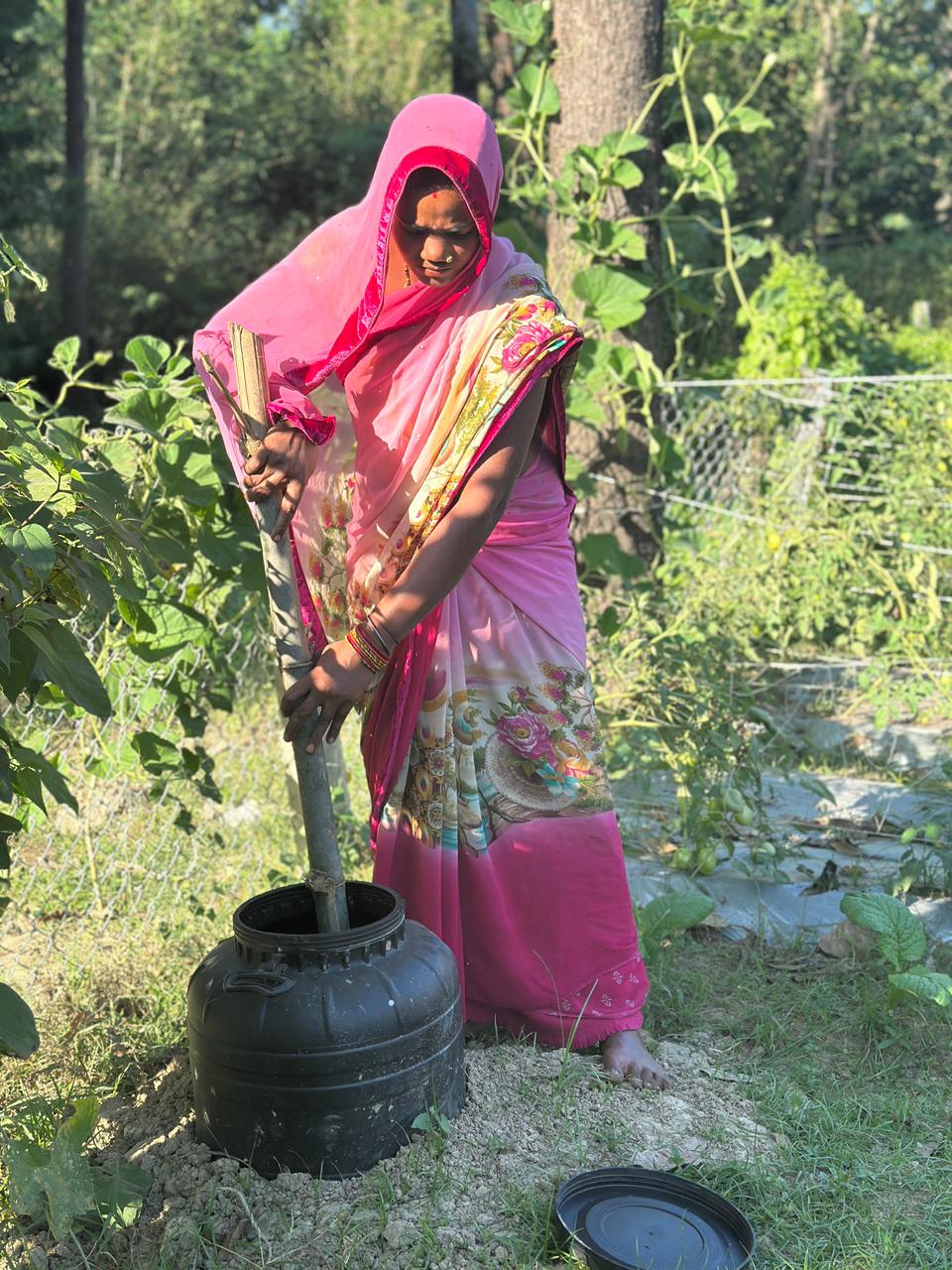
Many women from her community are now also linked to local schools through the Home-Grown School Feeding Programme, ensuring fair prices and stable markets. Farmer groups are also building collective marketing systems through new collection centres.
To sustain and scale results, two local governments are finalizing climate-resilient, gender-responsive agriculture policies.
Ram Kumari’s journey shows that when rural women have access to knowledge, tools and markets, they not only transform their farms—they transform their communities. As climate change continues to threaten food systems, women like Ram Kumari are proving that resilience grows from the ground up.
Article prepared by Ganesh Dhakal, Programme Policy Officer (Livelihood and Agriculture and Market Linkages), WFP Nepal