Image


In any society, becoming a widow is a challenging life-changing event for women and their children. In rural Niger, however, such a difficult change is compounded by discriminatory social norms relating to widowhood.
Fati Idé participated in the first phase of the JP RWEE from 2015 – 2021, by joining one of the FAO-run Dimitra clubs. Those community listeners’ clubs are groups of women, men and young people – mixed or not – who decide to organise themselves so as to work together to bring about changes in their communities. They meet regularly to discuss the challenges they face in their daily lives, make decisions and take action to resolve their problems.
Some women participating in the programme’s second phase in a neighbouring district recently visited her community to learn more about their experiences in the programme. They were inspired by what they heard as she recounted her story before a visibly emotional audience. She explained how the club gave her the opportunity to train, to transform, take responsibility and realise oneself.
“My name is Fati Idé, and I’m a resident of Baziga, my native village, where I married at the age of 16. After 32 years of marriage, my partner died in my arms following a long illness. I am the mother of 3 adult girls and two boys, one of whom is 21 and one is 16.
In my widowhood, I was a victim of the customs of the village and of this region, in which widows are stigmatized, and a widow like me cannot hope to remarry in her own village. Indeed, the men of the village who court a widow are regarded as being people of low morals and suspected by the community of having been courting her clandestinely long before the death of her husband.
Then there is the hostility of my in-laws and that of my children and grandchildren, who have implicitly turned against me to the point of disapproving of the idea of a second marriage. Social norms deny me the logical title of head of household. Very often, my oldest boy who is assigned the role of answering for me because the community attributes this responsibility to him, in the name of their father, in the various decision-making processes in the village and even within the family.
Having spent my entire life in Baziga, I did not see myself in a new life far from my village. I told myself in my reflections that I could never remarry.
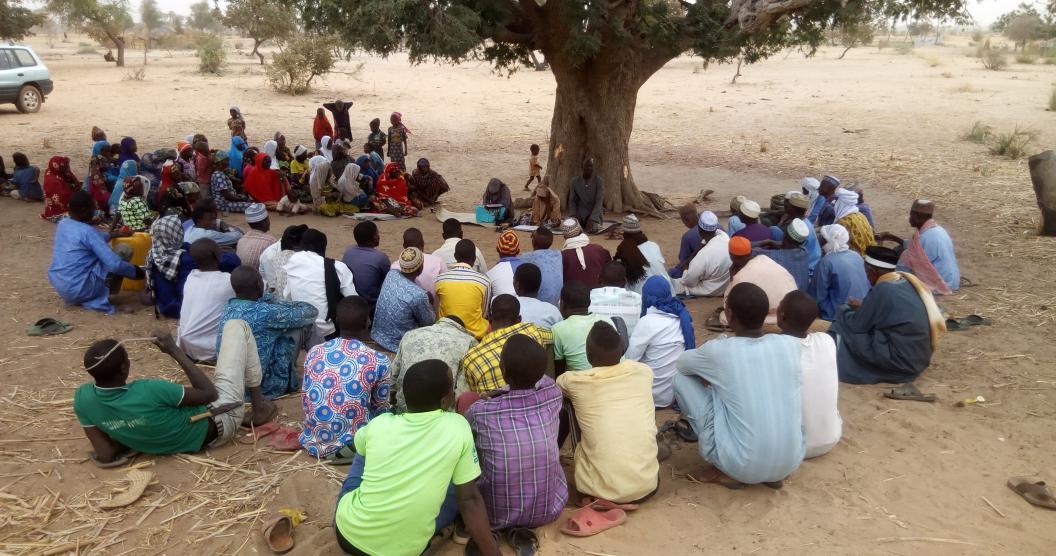
Dimitra Clubs are groups of rural women and men who decide to meet regularly to discuss the challenges they face in their daily lives, make decisions together and take collective action to solve community problems with their own means.
Like the other widows, I felt stigmatized and bound in chains until the arrival of the JP RWEE in the village at the end of 2015. The JP RWEE began its activities with the installation of the Dimitra Clubs. With valour, I joined the club of young women called “younger adults” in the village, despite the gossip to which I was subject, like the few other widows my age. I took the opportunity of the Dimitra Clubs to become the village leader. I was able to put forward opinions, and even men became more and more convinced of my opinions during meetings in village assemblies. Over time, I discovered I had talents and potential that allowed me to have confidence in myself and to remain constantly alert in my exchanges with my peers when thinking and making decisions about the life of the community.
The forming of the Dimitra Clubs allowed the village to reflect on the remarriage of widows as a concern to which a solution must be found. During the reflection process, the group dismantled all the arguments based on ethics and religion that kept widows in a confined state. The marginalisation of widows was publicly declared as an outdated practice in Baziga and abandoned immediately.
It was a such a great relief to see the world open up before you. After the community changed its attitude to widows, I was able to remarry. My life has unexpectedly changedfor the better. I feel confident and valued in the skills and commitment that drive me. A new version of myself has been born.
Two months after my remarriage, more than five other young widows from my village who were going through the same ordeal followed in my footsteps. The news of the change in our village’s state of mind spread like dew, and was distilled into other nearby villages, which followed in our footsteps. Several widows have remarried and now consider themselves with pride and dignity, in the same way as any other married women in the village. Our status as widows, which we thought was forever sealed, has changed.
I finally came out of my chains with more commitment and energy to carry out club activities for the service and happiness of my entire village. I am a leader and led the creation of a village cooperative called “Makani” which then mobilised seven other cooperatives in the village to found “the Banikoubey Union”.
The Union has over 80 members, at the top of which I am President. Our group excels in peanut oil extraction. Three years after the JP RWEE exited from our communities, we have just been contracted with a project of an international institution to supply a large quantity of peanut oil for establishments in the municipality. This encourages our ambition for economic empowerment as rural women.”
Fati Idé concludes: “With the dynamism instilled by our clubs, no woman from Baziga is idle today. They are all engaged in the fight for their economic and financial empowerment. We are increasingly protected from gender-based violence perpetrated by our husbands and the community for issues related to family responsibilities or financial capacities that allow us to have a voice. We contribute with dignity and ease to the education of our children and to the improvement of the menu of our families and our comfort.”